Software-QS-Tag 2026: mgm and QF-Test on AI in testing
At Software-QS-Tag 2026 in Frankfurt on November 11 and 12, mgm presents two talks and a panel on AI in software testing. You can also find us at our booth with QF-Test on both days.

mgm at the IBM Legal Tech Hackathon Göttingen: AI for Justice
Deadlines, legal briefs, investigation files: At the Legal Tech Hackathon Göttingen on October 29–30, 2026, law and computer science students will build AI prototypes for the justice system in just 24 hours. mgm technology partners is taking part as a partner in the eJustice Innovation Alliance. Here you’ll find the program, the challenges, and how to register.

Modernizing Access Databases: Why Public Agencies and Businesses Should Take the Next Step
In many public agencies and businesses, homegrown Access databases still support important processes, often outside the view of central IT. They show how much business units can achieve on their own. Given rising demands for security, data protection, and digital sovereignty, however, now is the time to put these applications to the test. This article shows how organizations can modernize their Access databases and move them to a future-proof solution in four steps.

From Process to Government Service: How A12 and CIB seven Make Digital Sovereignty Real
Government services rarely fail because of the idea. They fail in the execution. Information moves back and forth between paper, email and specialized administrative systems, applications are complex, processes take weeks, and the systems involved are often only loosely connected. Yet the goal is clear: fully digital and sovereign at the same time. Getting there takes technology that can support large-scale administrative systems without locking agencies into a single vendor.

Sovereign in the Cloud with A12 and Confidential Computing
Digital government faces a trade-off that agencies feel every day. On one side is the need for control over applications, data, and operations. On the other, digital services require availability, scalability, and performance, qualities that cloud infrastructure delivers better than in-house data centers. But the real question isn't on-premises or cloud. It's how to bring the two together.

Six Months to Market Readiness: mgm technology partners Delivers a Complex B2B Application for...
Together with CHEFS VALUE by CHEFS CULINAR Software und Consulting GmbH, a subsidiary of CHEFS CULINAR, mgm technology partners built AIVI Smart Cuisine 100 percent agentically, from architecture all the way to operations.

AI accelerates IT. But where exactly?
A department can define its AI requirements in a single afternoon. In the past, that would have taken weeks. Nevertheless, these needs won’t be prioritized until the next Portfolio Board meeting, which is held only once a quarter. Many companies are currently experiencing the same thing: AI speeds up individual work steps, but not the organization as a whole. The bottleneck shifts from development to coordination, handoffs, and decision-making.

The evolution of the IT organization: Where you stand and what’s next
From the IT Department to an Agency-Based Organization: How IT organizations are currently restructuring, why most are further behind than they realize, and what forces are at work right now.

Sandboxing in ESACA: Taking Control of AI Coding Agents
What happens when an AI coding agent suddenly gains access to every password in the company? The new ESACA sandbox prevents exactly that, and it does so in a way that keeps the secret hidden even from the agent itself. A look at the technology behind it, based on a real project example from practice.
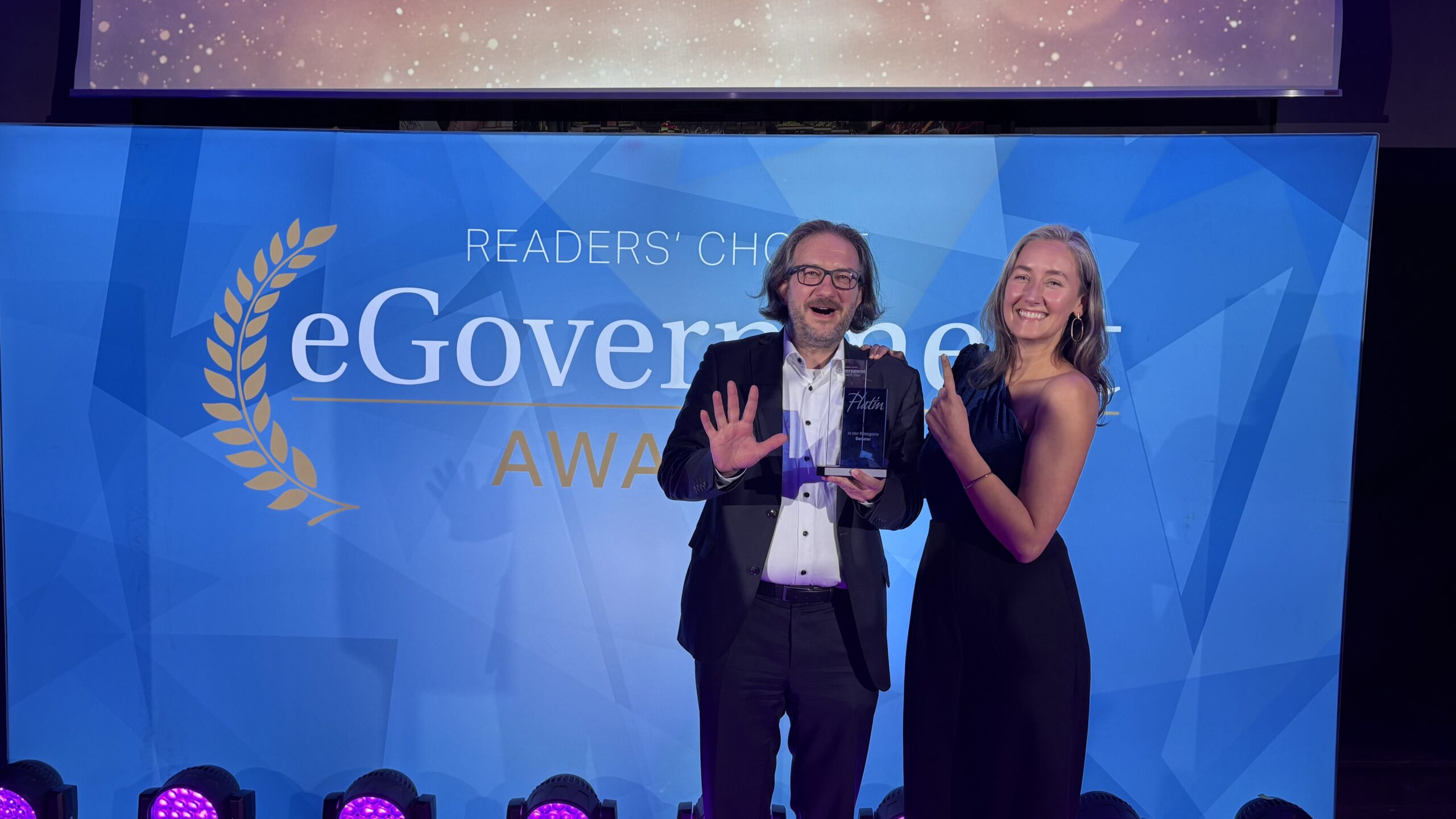
Platinum Six Times in a Row: What’s behind the win at the 2026 eGovernment...
For the sixth time in a row, the readers of eGovernment have awarded mgm a Platinum prize in the “Consultant” category. The eGovernment Readers’ Choice Award is presented annually and is one of the most prestigious awards for the digitization of public administration in Germany. Unlike jury-selected awards, the winners here are chosen by the people who work on digitization projects every day in government agencies, IT service providers, and ministries. That is exactly what makes this award so valuable to us.