
Last Updated on 8. July 2026
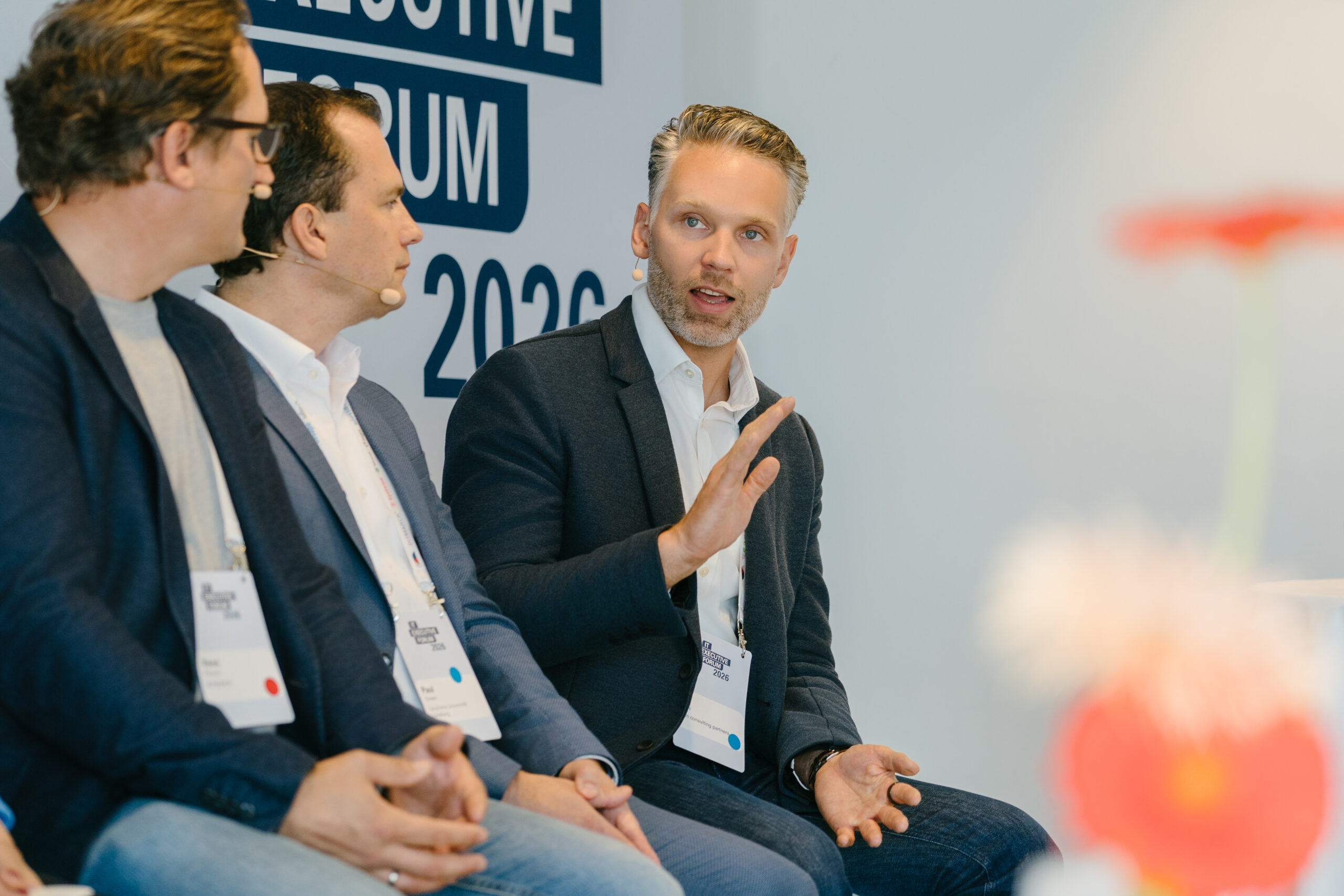
On June 9, Frank Kneschke, Nils Gralfs, and Anne Bernemann represented mgm consulting partners at the IT-Executive Forum in Hamburg. There were 120 IT executives, many open discussions, and a few questions that were still on our minds on the way back.
The format thrives on contradiction. “Agility is dead” was the provocative statement hanging in the air. So was the question of whether CIOs will still be needed in five years. And a common theme ran through nearly all the panels: AI transformation is business transformation.
Anyone who treats this as an IT project is bound to fail. Several panels illustrated this in different ways. Younger employees have long been using AI tools and wonder why the company is lagging behind. Who will drive change in this situation was one of the open questions of the day.
What we developed in the “Rethinking IT” working group
Our focus was on the “Rethinking IT” working group, which spent two sessions addressing a core question: How is the role of the CIO changing, and how must an IT organization be structured to be truly effective in a world of SaaS, the cloud, and agent-based AI?
The discussions confirmed much of what we know from our own consulting practice. IT organizations that limit themselves to implementation and operations are losing relevance. Business units are beginning to fend for themselves—gradually, without much fanfare. When a business unit takes matters into its own hands to support a business capability critical to it, it often does so out of frustration that IT cannot clearly articulate what support it offers for which business area.
Resolving this problem requires a common language and greater integration of domain and process expertise within IT. Even though this generally requires organizational adjustments, what is needed first and foremost is a fundamentally different self-image for IT.
This aligns with what our CIO study on digital transformation revealed. The strategy is in place. Alignment with the business is too—at least on paper. What’s missing are the levers for implementation and an honest examination of what the IT organization is truly expected to achieve.
In our white paper “Are CIOs Becoming Obsolete?”, we described three ideal roles: the co-architect, who helps shape the business roadmap; the integrator, who holds platform logic and governance together; and the industrialized operator, who delivers professionally but loses influence if they cannot find answers to the new requirements.
Which model prevails varies from company to company—but the question arises in every organization, and it’s happening now.
What we specifically offer
We support CIOs and IT executives through precisely these transitions. As part of our CIO Advisory service, we work to strategically realign IT organizations and build robust alignment with the business. With clear responsibilities, effective governance structures, and a realistic view of what the organization can currently achieve and what lies ahead.
The IT business partner model cannot be introduced via an organizational chart. It requires a cultural shift: new formats for dialogue, new role models, people navigating unfamiliar territory, and support to ensure that transformation and change are truly effective. And when the question arises of what job profiles and skill levels should look like in the IT organization of the future, we work through this together with HR. Together, these elements add up to more than the sum of their parts.
What else was on the agenda at the IT Executive Forum 2026
The panel on hybrid threats painted a concrete picture. Up to 300,000 cyberattacks per year, ransomware as the most common type of attack, and a question that an alarming number of companies cannot answer: what happens in the first 72 hours if IT systems or power go down? NIS2 does not automatically protect against misjudging one’s own vulnerability. Even those who believe they have complied with the regulation are still part of a supply chain and bear responsibility in both directions.
During the panel on AI in small and medium-sized businesses, there was consensus that regulation does not really hold up as an argument for taking a wait-and-see approach. The formula for success that nearly everyone agreed on: architecture plus governance plus change management. This varies by company and level of maturity, but it’s always a combination of all three.
What we’re taking away
One thing is clear: Transformation can only succeed if IT, business, and the organization truly work together effectively—and if there is someone there to shape this process.
Many thanks to the IT-Executive Club and all the participants for this wonderful event. We look forward to the next one.